Technical Universities and Industry: strong partners, challenging competition - achieving more together
04.06.2018
Vienna (IV) – The first “Higher Education Policy Dialogue” took place today at the House of Industry under the motto “Technical Universities and Industry: Strong Partners, Challenging Competition – Achieving More Together.” At the invitation of the Federation of Austrian Industries (IV) and TU Austria, national and international experts and company representatives discussed measures and criteria for a future-oriented center of knowledge and innovation. The focus was on future development scenarios, opportunities and challenges in the field of knowledge and technology transfer, and strengthening excellence in science and industry. International best-practice examples illustrated how knowledge and technology transfer between universities and industry can work best and how the concept of entrepreneurship can be more firmly anchored in universities.
“Education, research, technology, and innovation are the pillars of Austria's success and the key to prosperity and employment,” emphasized Georg Kapsch, President of the Federation of Austrian Industries (IV). He pointed to the special role played by the many companies in Austria that are global market leaders and have chosen Austria as their location for their R&D investments. The research premium and direct R&D project funding are particularly important advantages for the country in this regard. “Companies account for around two-thirds of all R&D investment in Austria, making them the largest source of funding for research and development in Austria. This puts us in second place in the EU after Sweden,” explained Kapsch. In an intensely competitive environment, it is important to focus even more attention on accelerating knowledge and technology transfer.
TU Austria President Harald Kainz once again emphasized the importance of close cooperation between science and industry as a driver of innovation, progress, and prosperity. “Austria is well on its way to becoming a European innovation leader, as the latest European Innovation Scoreboard shows. The driving force behind this development is universities, research institutions, and innovative companies,” Kainz said with conviction. He emphasized above all the positive culture of cooperative research and development, which offers security for all cooperation partners through long-term commitments, for example in the form of CD laboratories or COMET competence centers. On behalf of TU Austria, Kainz called for further promotion of internationalization at universities and the expansion of capacities and infrastructure in STEM subjects throughout the entire education system in order to secure Austria's position as a location for research and innovation. In particular, he said, more investment was needed in ICT education in view of the dynamic nature of digital transformation processes. According to Kainz, universities also play an important role in translating research ideas into marketable products: “Here, we focus on intensive support for start-ups and spin-offs, as well as promoting entrepreneurial thinking among students, for example in our student teams and numerous other initiatives.”
“Close cooperation between science and industry is a decisive factor for success in strengthening the entire innovation chain – from basic to applied research – and in leveraging our country's innovation potential,” emphasized Kapsch and Kainz. In order to create further excellence in science and industry and to attract the best minds, it is particularly important to clearly profile universities, provide excellent R&D infrastructure, and offer internationally recognized expertise. To this end, the proportion of competitively awarded funds to universities must be further increased in order to enhance their competitiveness and visibility internationally. It is also necessary to implement the announced research financing law and the annual, continuous increase in federal research spending in order to ensure sustainability and position Austria for the future. “It will take the combined strength of all FTI players to make Austria a top innovation country,” concluded the IV President and the TU Austria President.
The first “Higher Education Policy Dialogue” was held at the House of Industry and featured discussions between
Federal Minister Heinz Faßmann (Federal Ministry of Education, Science and Research), Georg Kapsch and Christoph Neumayer (Federation of Austrian Industries), Harald Kainz (Graz University of Technology), Sabine Seidler (Vienna University of Technology), Wilfried Eichlseder (Montanuniversität Leoben), Silvio Bonaccio (ETH Zurich), Ernst M. Schmachtenberg (RWTH Aachen University), Wolfgang Rosenstiel (Eberhard Karls University Tübingen), Sabine Herlitschka (Infineon), Stefan Poledna (TTTech), Johannes Homa (Lithoz), Klement Tockner (FWF), Kurt Koleznik (FHK), Marion A. Weissenberger-Eibl (Fraunhofer Institute for Systems and Innovation Research ISI) and Ernst Andreas Hartmann (Institute for Innovation and Technology)
Contact details:
TU Austria:
Mag. Dr. Elke Standeker, Bakk. MBA
Secretary General of TU Austria
T: +43 3842 402 7013
elke.standeker(at)tuaustria.ac.at
IV Newsroom
+43 (1) 711 35-2306
newsroom(at)iv.at
https://www.iv.at/Presse
Digital press kit: http://www.ots.at/pressemappe/112/aom
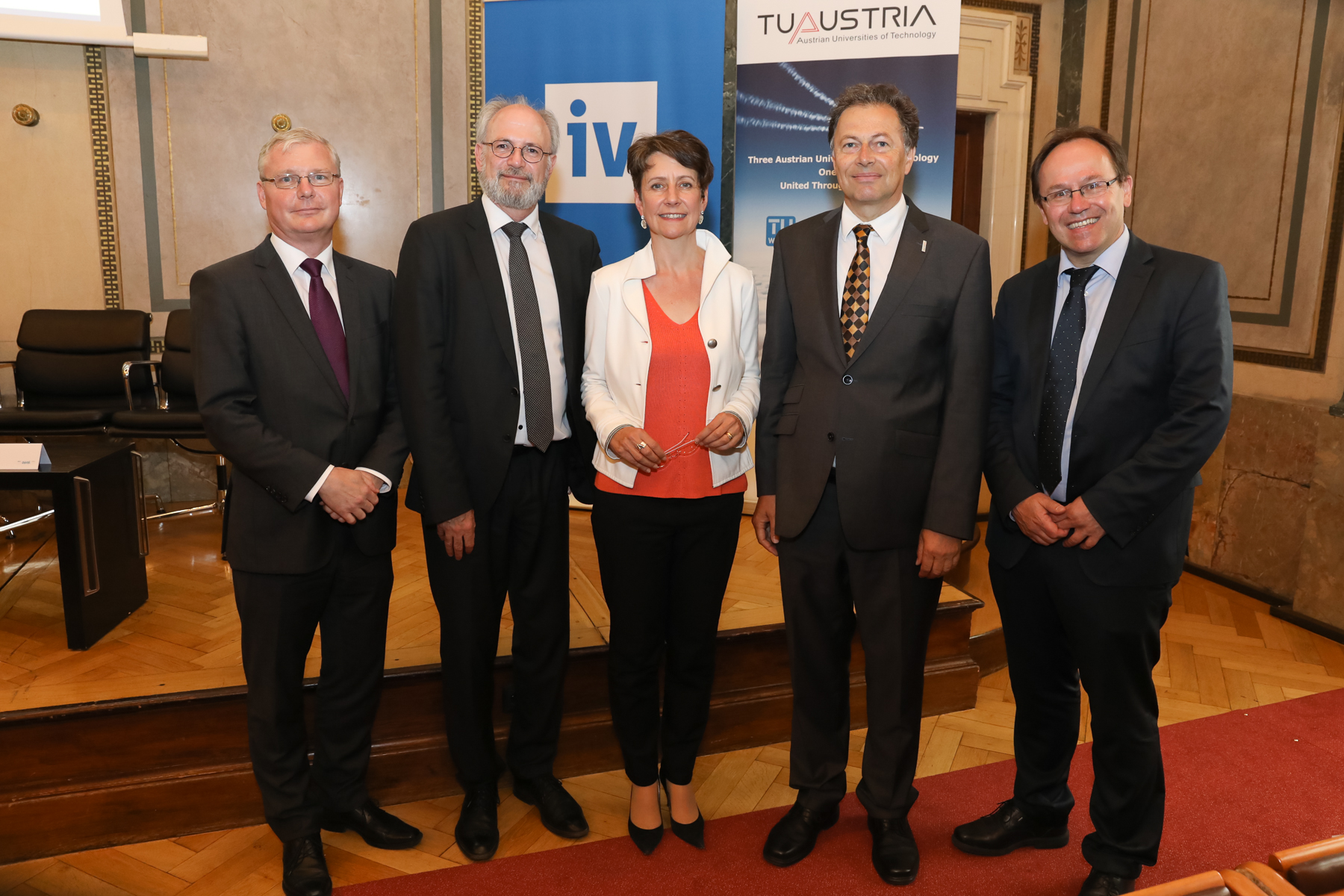
1. Pod Stand vlnr: Silvio Bonaccio (ETH Zürich), Ernst Andreas Hartmann (IIT, Berlin), Sabine Herlitschka (Infineon), Wilfried Eichlseder (Montanuniversität Leoben), Klement Tockner (FWF). Foto: © Katharina Schiffl
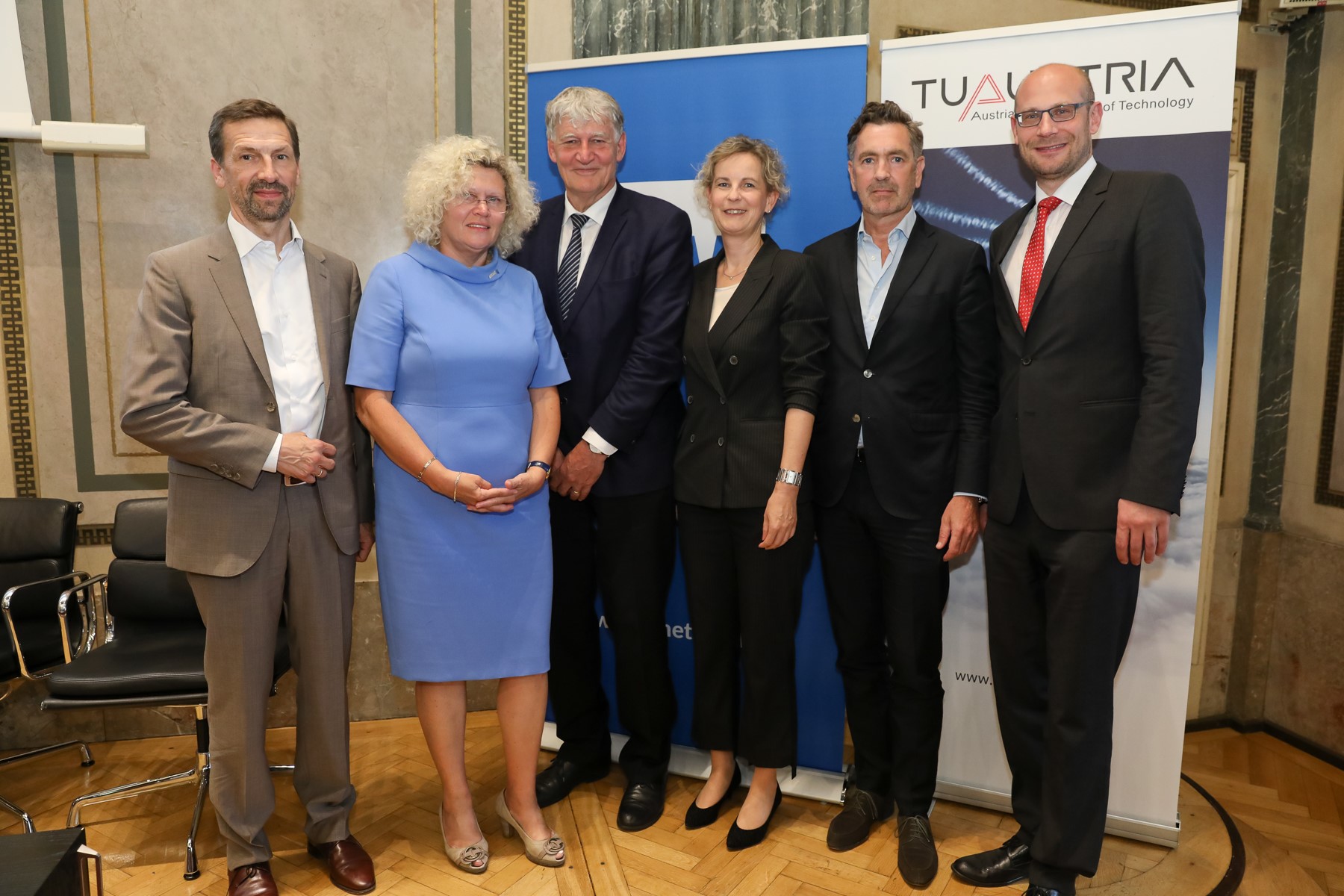
2. Pod Stand vlnr: Stefan Poledna (TTTech), Sabine Seidler (TU Wien), Ernst M. Schmachtenberg (RWTH Aachen Universität), Marion A. Weissenberger-Eibl (Fraunhofer-ISI, Karlsruhe), Kurt Koleznik (FHK), Johannes Homa (Lithoz). Foto: © Katharina Schiffl
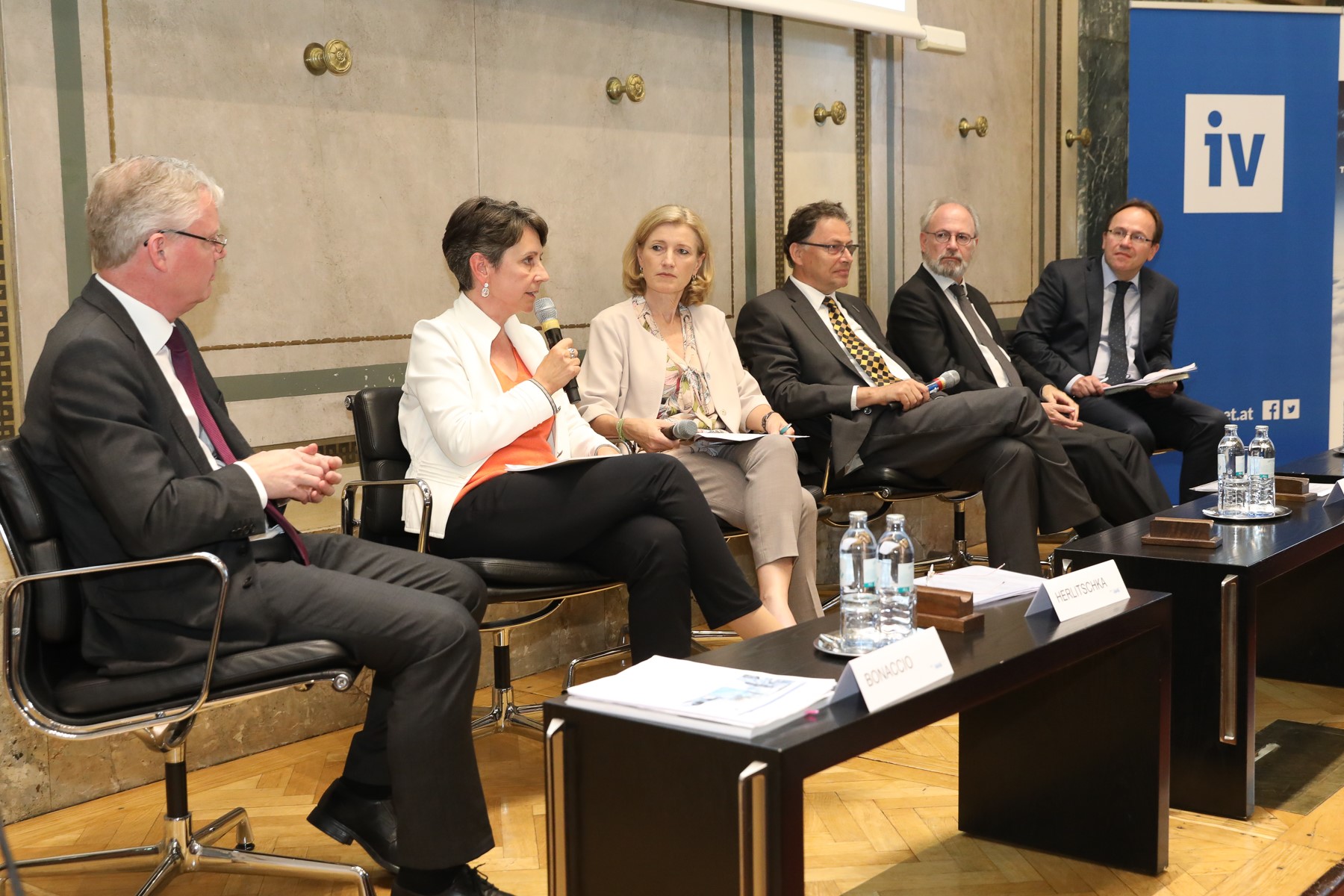
1. Pod vlnr: Silvio Bonaccio (ETH Zürich), Sabine Herlitschka (Infineon), Martina Salomon (Kurier), Wilfried Eichlseder (Montanuniversität Leoben), Ernst Andreas Hartmann (IIT, Berlin), Klement Tockner (FWF). Foto: © Katharina Schiffl
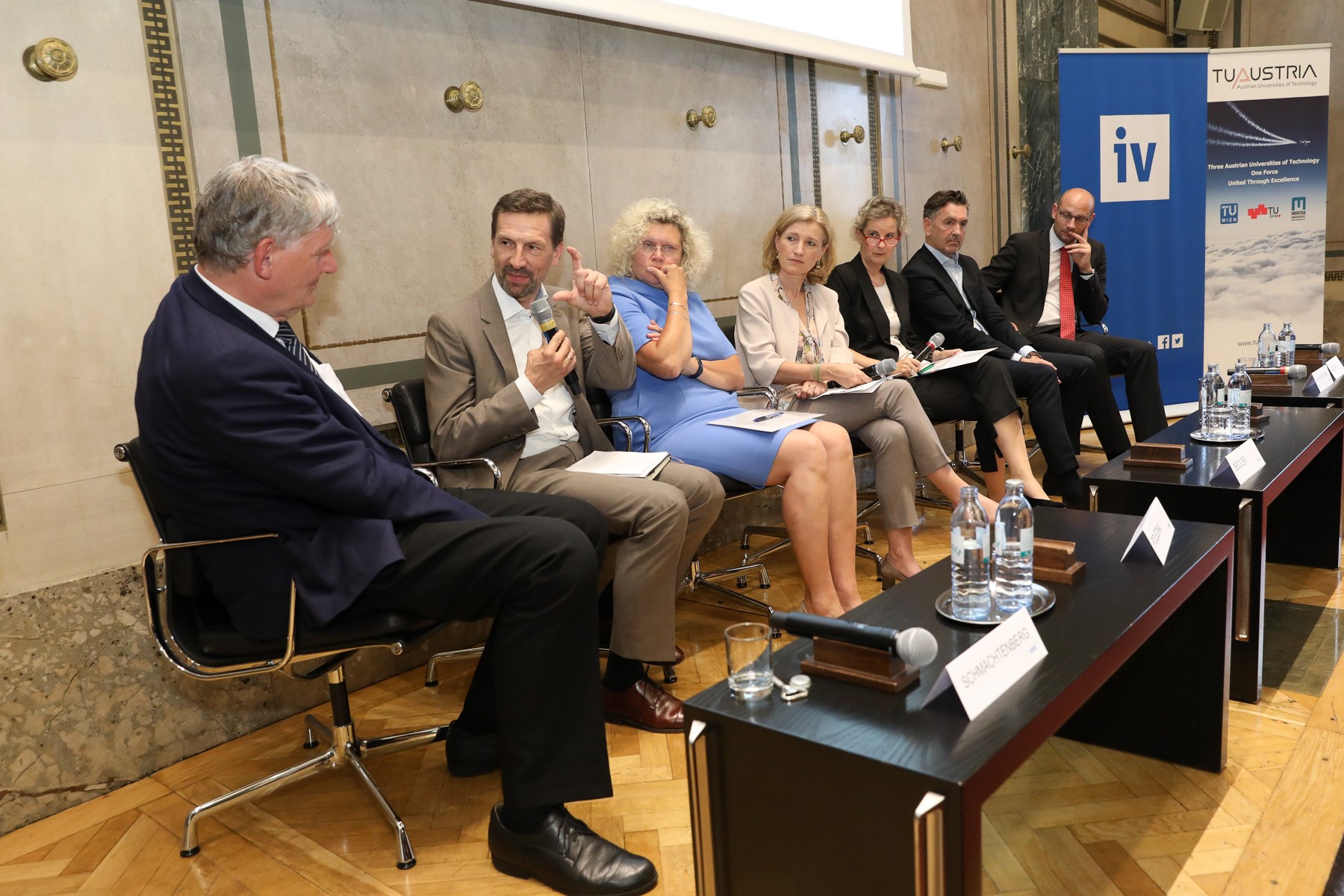
2. Pod vlnr: Ernst M. Schmachtenberg (RWTH Aachen Universität), Stefan Poledna (TTTech), Sabine Seidler (TU Wien), Martina Salomon (Kurier), Marion A. Weissenberger-Eibl (Fraunhofer-ISI, Karlsruhe), Kurt Koleznik (FHK), Johannes Homa (Lithoz). Foto: © Katharina Schiffl